Sheikh Hasina Biography 2026: Early Life, Political Career & Bangladesh PM Journey
Introduction-Sheikh Hasina Early Life
Sheikh Hasina is one of the most influential political leaders in the history of Bangladesh. As the longest-serving prime minister of the country, her leader has shaped Bangladesh’s political direction, economic development, foreign policy, and social progress for decades. Known for her strong governance style, emphasis on economic growth, and firm stance against extremism, Sheikh Hasina remains a central figure in South Asian politics. This in-depth, SEO-optimized article explores Sheikh Hasina’s early life, political journey, major achievements, controversies, and long-term legacy in Bangladesh.Sheikh Hasina Biography
Know More Update About Bangladesh Politics Click Here
Early Life and Family Background
Sheikh Hasina was born on September 28, 1947, in Tungipara, Gopalganj, in what was then East Bengal (now Bangladesh). She is the eldest daughter of Sheikh Mujibur Rahman, the founding father of Bangladesh and the country’s first President. Growing up in a politically active family, Sheikh Hasina was exposed to nationalist politics from an early age.
Education and Family Background
The assassination of Sheikh Mujibur Rahman and most of his family members in August 1975 was a defining moment in her life. Sheikh Hasina and her sister Sheikh Rehana survived because they were abroad at the time. This tragic event deeply influenced her political resolve and later shaped her commitment to restoring her father’s vision of a secular, democratic Bangladesh.
Political Career of Sheikh Hasina
Sheikh Hasina formally entered politics in the early 1980s while living in exile. In 1981, she was elected President of the Bangladesh Awami League, one of the country’s oldest and most influential political parties. Her return to Bangladesh marked the beginning of a long struggle against military rule and authoritarian governance.
During the 1980s and early 1990s, Sheikh Hasina emerged as a key leader of the pro-democracy movement. She played an important role in mobilizing public support against military ruler Hussain Muhammad Ershad, contributing to the restoration of parliamentary democracy in 1990.
Sheikh Hasina Biography
Sheikh Hasina as Prime Minister of Bangladesh (1996–2001)
Sheikh Hasina became Prime Minister of Bangladesh for the first time in 1996 after the Awami League won the national elections. During this term, her government focused on democratic reforms, economic stabilization, and regional diplomacy.
One of her most notable achievements during this period was the signing of the Chittagong Hill Tracts Peace Accord in 1997, which helped end decades of conflict in the region. Her administration also signed the historic Ganges Water Sharing Treaty with India, addressing a long-standing transboundary water dispute.
Return to Power and Long-Term
After a period in opposition, Sheikh Hasina returned to power following the 2008 general elections. This marked the beginning of an extended period of Awami League governance. Under her leadership, Bangladesh experienced significant economic growth, infrastructure development, and social progress.
Her government prioritized large-scale projects such as the Padma Bridge, metro rail systems, power plants, and digital connectivity initiatives. The vision of “Digital Bangladesh” aimed to expand access to technology, e-governance, and ICT-driven economic opportunities.
Sheikh Hasina Biography
Economic Development and Social Progress
One of the most frequently discussed aspects of Sheikh Hasina’s leadership is Bangladesh’s economic transformation. During her time in office, the country achieved steady GDP growth, expanded its garment manufacturing sector, and increased foreign exchange reserves.
Bangladesh also made notable progress in human development indicators, including poverty reduction, women’s empowerment, education enrollment, and healthcare access. Sheikh Hasina received international recognition for her efforts in women’s education, climate resilience, and public health initiatives.Sheikh Hasina Biography
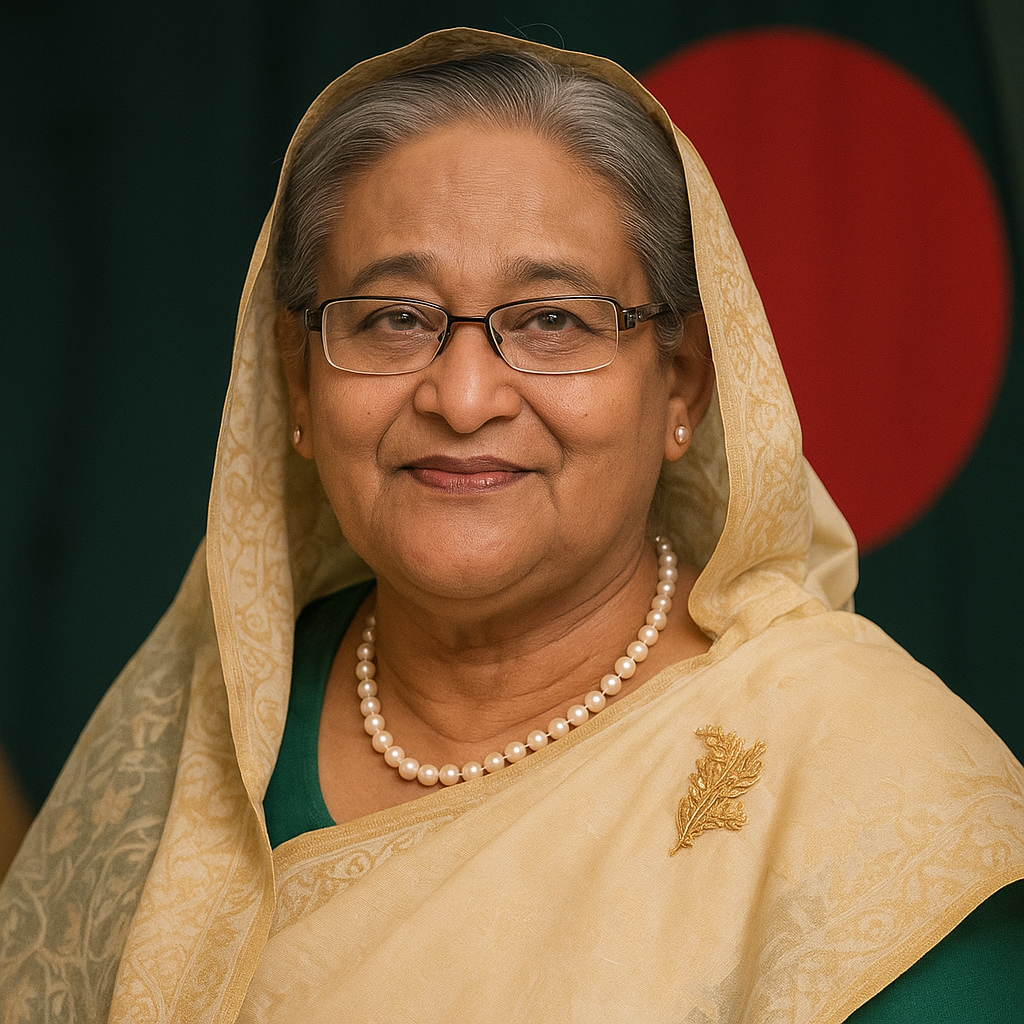
Foreign Policy and International Role
Sheikh Hasina’s foreign policy emphasized regional stability, economic cooperation, and strategic balance. She maintained strong relations with neighboring India, China, and other global partners while actively participating in international forums such as the United Nations.
Her government played a key role in providing humanitarian shelter to Rohingya refugees fleeing violence in Myanmar, a move that earned global attention and praise despite the economic and social challenges it created for Bangladesh.
Controversies and Criticism-Sheikh Hasina Biography
Despite her achievements, Sheikh Hasina’s leadership has also faced criticism. Human rights organizations, opposition parties, and international observers have raised concerns about freedom of expression, political opposition, and electoral processes during certain periods of her rule.
Her government has defended its actions by emphasizing national security, economic stability, and the fight against extremism. Supporters argue that strong governance was necessary to maintain development momentum and prevent political chaos.Sheikh Hasina Biography
Sheikh Hasina’s Leadership Style
Sheikh Hasina is known for her decisive and centralized style. Admirers view her as a strong, pragmatic leader who delivered stability and growth. Critics, however, describe her approach as increasingly authoritative. Regardless of perspective, her influence on Bangladesh’s political system is undeniable.
Achievements and Contributions
Over the years, Sheikh Hasina has received numerous international awards for her contributions to peace, women’s empowerment, climate action, and public service. These honors reflect her global profile and Bangladesh’s rising presence on the world stage.
Legacy and Historical Significance-Sheikh Hasina Biography
Sheikh Hasina’s legacy is complex and far-reaching. As the daughter of Bangladesh’s founding father, she carried a historic responsibility that shaped her political journey. Her long tenure redefined governance, infrastructure development, and economic ambition in Bangladesh.
Whether viewed as a visionary development leader or a controversial political figure, Sheikh Hasina’s impact on Bangladesh will be studied for generations. Her role in transforming Bangladesh from a struggling post-war nation into a growing economy is a central chapter in the country’s modern history.
Conclusion-Sheikh Hasina Biography
Sheikh Hasina remains one of the most significant leaders in South Asia. Her life story reflects resilience, political determination, and a deep connection to Bangladesh’s national identity. From her early struggles to her long years of leadership, Sheikh Hasina’s journey offers insight into the challenges and possibilities of governing a developing nation in a complex global environment.
For readers seeking to understand Bangladesh’s political evolution, economic growth, dynamics, Sheikh Hasina’s story is both essential and compelling.
Prime Minister of Bangladesh Source : https://en.wikipedia.org/wiki/Sheikh_Hasina
More details about bd politics : https://trendyworldnews.com/khaleda-zias-health-condition-and-treatment-progress/