Mental Health Tips to Stay Positive and Stress-Free
Mental health plays a crucial role in how we think, feel, and act in our daily lives. In the modern world, people face constant pressure from work, studies, family responsibilities, and social expectations. As a result, stress, anxiety, and emotional exhaustion have become very common. Taking care of mental health is not a luxury—it is a necessity for living a balanced and fulfilling life.
Below are effective and practical mental health tips that can help you stay positive, calm, and stress-free in everyday life.
Understanding the Importance of Mental Health
Mental health affects every part of life, including relationships, productivity, decision-making, and physical health. When mental health is ignored, it can lead to problems such as anxiety disorders, depression, burnout, and lack of motivation.
Good mental health helps you:
- Cope with daily stress
- Maintain healthy relationships
- Work productively
- Make better life decisions
Just like physical health, mental well-being requires regular care and attention.
Practice Mindfulness and Meditation Daily
Mindfulness means focusing on the present moment without judgment. Many people suffer mentally because they constantly worry about the future or regret the past. Mindfulness helps break this cycle.
Meditation is one of the most effective ways to calm the mind. Benefits include:
- Reduced anxiety and stress
- Improved concentration
- Better emotional control
- Improved sleep quality
You don’t need hours of meditation. Even 10–15 minutes a day can significantly improve mental clarity and emotional balance.
Manage Stress in Healthy Ways-Mental Health Tips
Stress is unavoidable, but how you manage it matters. Chronic stress can negatively affect both mental and physical health.
Healthy stress-management techniques include:
- Deep breathing exercises
- Light physical activity
- Listening to calming music
- Taking short breaks during work
Avoid coping mechanisms such as overeating, smoking, or excessive screen time, as they may increase stress in the long run.
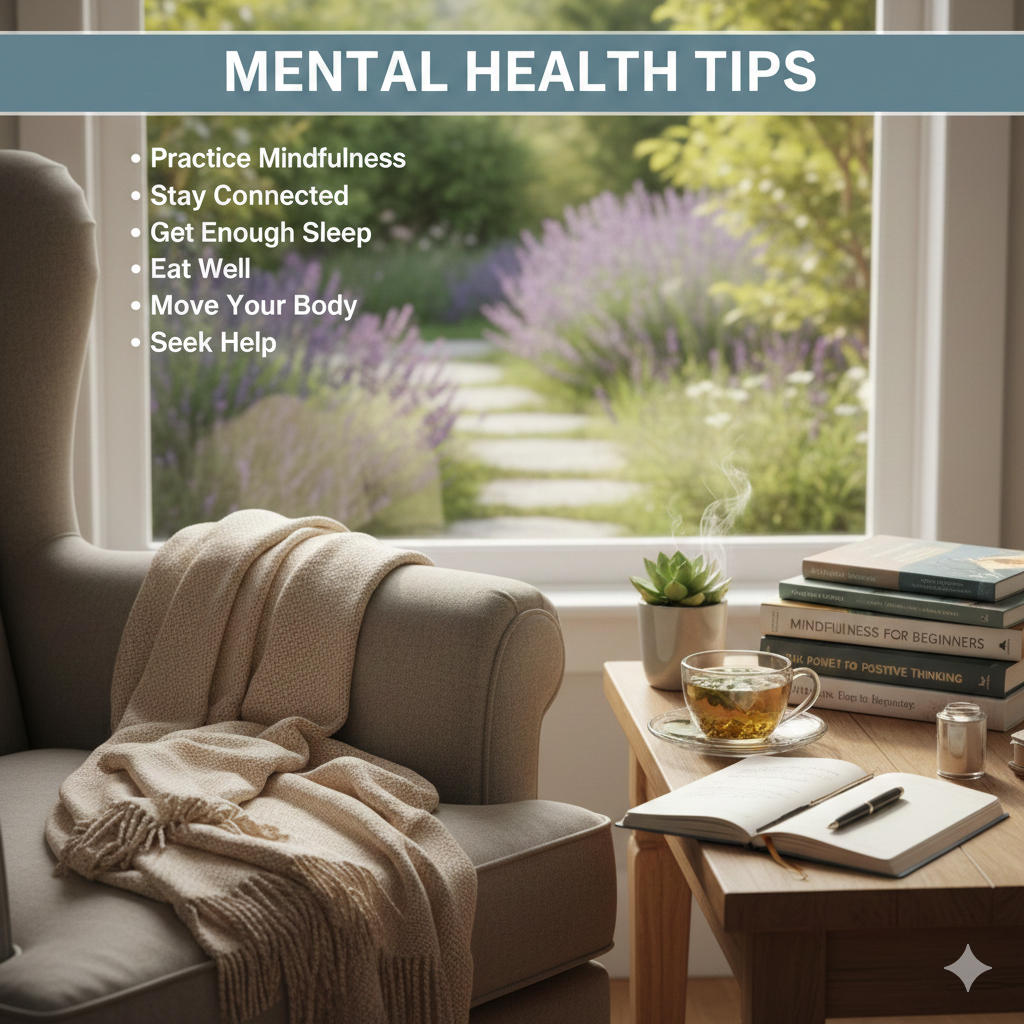
Maintain Strong Social Connections-Mental Health Tips
Humans are social beings. Isolation and loneliness can seriously harm mental health. Staying connected with family, friends, and loved ones provides emotional support and a sense of belonging.
Talking openly about your feelings helps:
- Reduce emotional pressure
- Gain new perspectives
- Feel understood and supported
Even a short conversation with someone you trust can improve your mood.
Set Realistic Goals and Healthy Boundaries
Trying to do everything perfectly often leads to mental exhaustion. Setting realistic goals helps reduce unnecessary pressure.
Important habits include:
- Breaking large tasks into smaller steps
- Saying “no” when you feel overwhelmed
- Taking rest without feeling guilty
Healthy boundaries protect your mental peace and prevent burnout.
Limit Social Media and Screen Time
Excessive social media use can increase anxiety, comparison, and negative thinking. Constant exposure to unrealistic lifestyles often makes people feel inadequate.
To protect mental health:
- Reduce unnecessary scrolling
- Follow positive and educational content
- Take regular digital breaks
Spending time offline helps you reconnect with real life and improves emotional stability.
Take Care of Physical Health for Mental Well-Being
Mental and physical health are deeply connected. Poor physical habits often lead to poor mental health.
Simple habits that support mental well-being include:
- Regular exercise
- Balanced nutrition
- Adequate sleep
Exercise releases endorphins, which naturally improve mood and reduce stress. Even a daily walk can make a big difference.
Get Enough Quality Sleep-Mental Health Tips
Sleep is essential for emotional regulation and mental clarity. Lack of sleep increases irritability, anxiety, and poor concentration.
Tips for better sleep:
- Maintain a regular sleep schedule
- Avoid screens before bedtime
- Create a calm sleeping environment
Adults should aim for 7–9 hours of quality sleep each night.
Practice Gratitude and Positive Thinking
Gratitude helps shift focus from problems to positive aspects of life. Practicing gratitude regularly can improve happiness and reduce stress.
You can:
- Write down three things you’re grateful for daily
- Focus on small positive moments
- Practice positive self-talk
Positive thinking does not mean ignoring difficulties—it means facing challenges with hope and resilience.
Learn to Accept Your Emotions-Mental Health Tips
It’s normal to feel sad, stressed, or anxious sometimes. Suppressing emotions can make mental health worse.
Healthy emotional habits include:
- Accepting your feelings without judgment
- Expressing emotions through writing or talking
- Allowing yourself time to heal
Emotional awareness builds inner strength and resilience.
Seek Professional Help When Needed
Seeking help is a sign of strength, not weakness. If stress, anxiety, or sadness becomes overwhelming or long-lasting, professional support can help.
Mental health professionals provide:
- Guidance and coping strategies
- Emotional support
- Safe space to talk openly
Early support can prevent long-term mental health problems.
Build a Daily Mental Self-Care Routine
Mental self-care should be part of daily life, not only during difficult times. Simple routines such as:
- Morning mindfulness
- Evening reflection
- Time for hobbies
help maintain emotional balance and inner peace.
Final Thoughts-Mental Health Tips
Mental health is a lifelong journey that requires patience, care, and self-understanding. By practicing mindfulness, managing stress, building strong relationships, maintaining healthy habits, and seeking help when needed, you can stay positive and emotionally strong.
A healthy mind leads to better decisions, stronger relationships, and a more meaningful life. Taking care of your mental health today will create a happier and more peaceful tomorrow.
Know More Details About Mental Health Tips Click Here
Know More About Health And Tips Updates Click Here
Healthy Life Tips Click Here