Khaleda Zia Death: Bangladesh Mourns the Loss of a Courageous Leader and Former Prime Minister
Bangladesh woke up to a moment of deep sorrow as news broke confirming the death of Khaleda Zia, one of the most influential and iconic political leaders in the country’s history. Her passing marks the end of an era that shaped modern Bangladeshi politics for decades. Millions of supporters, critics, and neutral citizens alike are united in grief, reflecting on a life filled with struggle, leadership, controversy, and undeniable impact.
Khaleda Zia was more than just a former Prime Minister. She was a symbol of resistance, strength, and political resilience in a nation that has witnessed intense political rivalry and transformation.
Khaleda Zia Death: What We Know So Far
The death of Khaleda Zia occurred after a prolonged period of illness. She had been receiving advanced medical treatment for multiple health complications. Despite efforts by doctors and family members, her condition deteriorated in recent weeks, leading to her tragic passing.
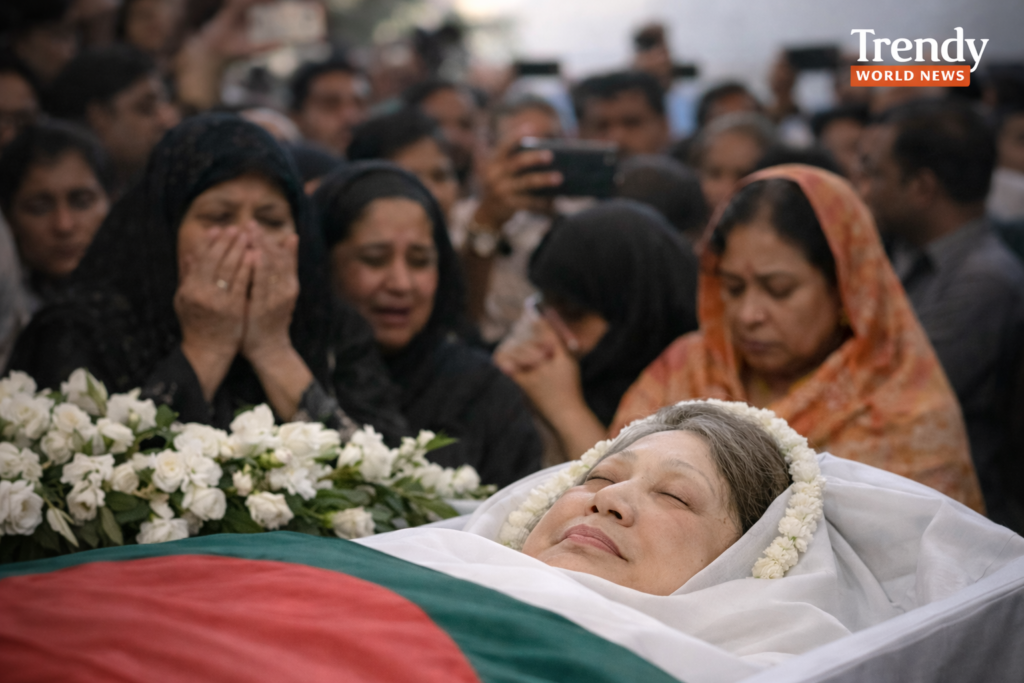
Her death has triggered nationwide mourning. Flags were lowered, condolence messages poured in from political leaders, foreign diplomats, and international organizations, acknowledging her role in Bangladesh’s political journey.
Khaleda Zia death Know More Details
Knoe More Political News
Early Life of Khaleda Zia: From Housewife to National Leader
Born in 1945, Khaleda Zia did not begin her life with political ambitions. She was known as a simple, reserved woman before fate thrust her into the national spotlight. Her life changed dramatically after the assassination of her husband, President Ziaur Rahman, in 1981.
The tragic loss forced Khaleda Zia into politics—a path she never originally sought but ultimately mastered.
Rise of a Political Icon-Khaleda Zia death
After joining the Bangladesh Nationalist Party (BNP), Khaleda Zia quickly emerged as a powerful voice against military rule. Her leadership during the anti-autocracy movement in the late 1980s played a key role in restoring democracy in Bangladesh.
In 1991, she made history by becoming Bangladesh’s first female Prime Minister through a democratic election. This milestone not only transformed Bangladeshi politics but also inspired women across South Asia.
Khaleda Zia as Prime Minister: Achievements and Challenges
Khaleda Zia served as Prime Minister three times—1991–1996 and 2001–2006. Her tenure focused on:
- Strengthening democratic institutions
- Expanding education and infrastructure
- Promoting private sector growth
- Enhancing Bangladesh’s international relations
However, her rule was also marked by political unrest, allegations of corruption, and intense rivalry with Sheikh Hasina—creating one of the most polarizing political duopolies in South Asian history.
A Life of Struggles, Prison, and Illness-Khaleda Zia death
In her later years, Khaleda Zia faced legal battles and imprisonment, which many of her supporters viewed as politically motivated. Her deteriorating health while in custody became a major human rights concern.
The death of Khaleda Zia has reignited discussions about political tolerance, justice, and compassion in Bangladesh’s political landscape.
Emotional Reactions Across Bangladesh-Khaleda Zia death
From rural villages to crowded cities, ordinary citizens expressed grief. Supporters gathered in silence, some holding her photographs, others shedding tears. Social media platforms were flooded with emotional tributes, prayers, and memories.
Many described her as:
- “A mother of democracy”
- “A fearless leader”
- “The voice of opposition”
International Condolences and Global Impact
World leaders and international organizations acknowledged the passing of former Prime Minister Khaleda Zia, highlighting her contribution to democracy and political pluralism.
Her death resonated beyond Bangladesh, especially among South Asian political circles, where she stood as a rare female leader who ruled with authority in a male-dominated era.
Khaleda Zia’s Political Legacy-Khaleda Zia death
The legacy of Khaleda Zia will remain complex but unforgettable. She:
- Changed the role of women in Bangladeshi politics
- Led major democratic movements
- Represented a powerful opposition voice
- Shaped modern political discourse
Supporters remember her courage. Critics remember controversies. History will remember both.
The Future of BNP After Khaleda Zia Death
The death of Khaleda Zia raises critical questions about the future leadership of BNP. Her absence creates a leadership vacuum that will test the party’s unity and direction.
Political analysts believe her influence will continue to guide BNP ideology, even after her passing.
A Nation Reflects, A Chapter Closes
The death of Khaleda Zia is not just the loss of a political figure—it is the closing of a significant chapter in Bangladesh’s history. Her life reflected the country’s political struggles, hopes, divisions, and resilience.
As Bangladesh mourns, one truth remains undeniable: Khaleda Zia’s name will forever be etched in the nation’s political narrative.
Final Words-Khaleda Zia death
History will debate Khaleda Zia’s decisions. Politics will analyze her legacy. But today, Bangladesh mourns a woman who stood firm in the face of adversity and left behind a story that will be told for generations.
May she rest in peace.
We are all love her and we respect her .