Introduction: Why the Full Moon Fascinates Humanity
The full moon has fascinated humans for thousands of years. From ancient civilizations to modern science, the glowing lunar disk has been associated with mystery, emotions, rituals, and even behavior changes. Every month, when the moon reaches its brightest phase, people around the world pause to observe, celebrate, and sometimes fear its influence.
In this full moon update, we explore the scientific explanation, spiritual significance, myths, psychological effects, and upcoming dates, making this a complete and SEO-friendly guide for readers seeking accurate and engaging information.
Full Moon More Updates Click Here
More Updates News Click here
What Is a Full Moon? (Scientific Explanation)
A moon occurs when the Earth comes directly between the Sun and the Moon. At this position, the moon’s surface fully reflects sunlight, making it appear completely illuminated from Earth.
Key Scientific Facts
- Occurs approximately every 29.5 days
- Part of the lunar cycle
- Marks the midpoint of the lunar month
- The moon rises at sunset and sets at sunrise
Scientifically, the full moon does not emit its own light—it reflects sunlight. Despite myths, modern science shows that the moon’s gravitational pull slightly affects tides but has no proven direct impact on human behavior.
Different Types of Full Moons
Not all full moons are the same. Some have special names based on seasons, distance, or appearance.
1. Supermoon
Occurs when the moon is closest to Earth, appearing larger and brighter.
2. Blood Moon
Happens during a total lunar eclipse, turning the moon reddish due to Earth’s atmosphere.
3. Blue Moon
The second full moon occurring within the same calendar month.
4. Harvest Moon
The closest to the autumn equinox, traditionally helpful for farmers.
Spiritual Meaning of the Full Moon
Across cultures, the spiritual meaning of the moon is deeply rooted in transformation, clarity, and emotional release.
Common Spiritual Beliefs
- Symbol of completion and fulfillment
- Time for letting go of negativity
- Enhanced intuition and awareness
- Popular time for meditation and manifestation rituals
Many people believe the amplifies energy, making it ideal for reflection, goal-setting, and emotional healing.
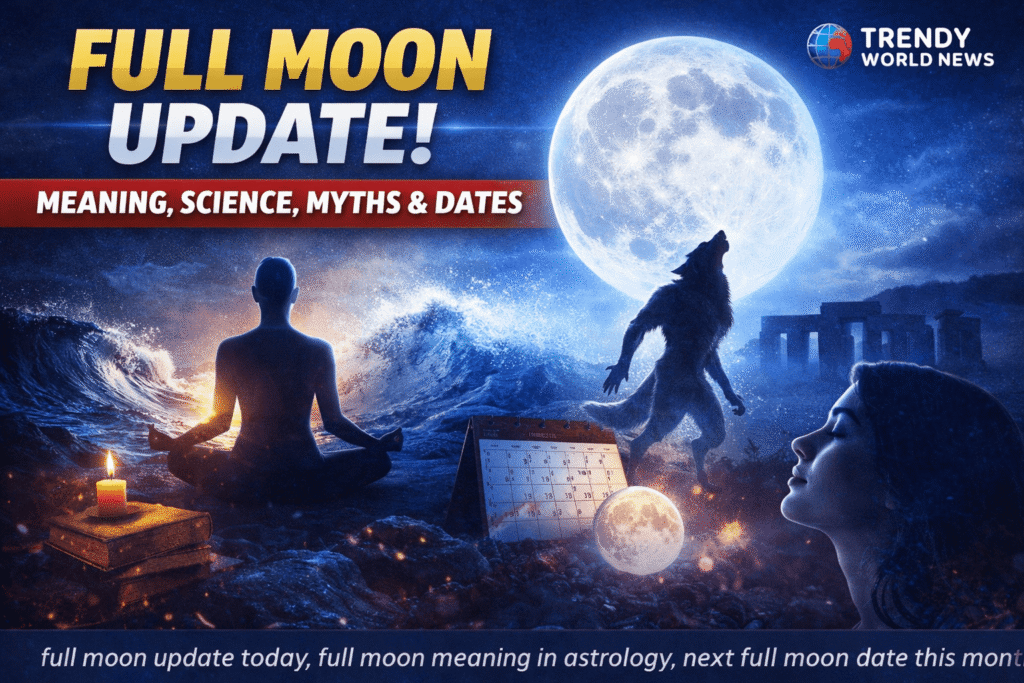
Myths and Folklore
The full moon has inspired countless myths and legends worldwide.
Popular Myths
- Werewolves transform under a full moon
- Causes madness (“lunacy”)
- Increased crime rates during full moon nights
- Stronger emotional reactions
While these myths are culturally significant, scientific research has found no solid evidence supporting extreme behavioral changes linked to the moon.
Psychological and Emotional Effects of the Moon
Some people report sleep disturbances or mood shifts during a moon. Researchers suggest this may be due to brightness at night or psychological expectations rather than lunar influence itself.
Reported Effects
- Difficulty sleeping
- Heightened emotions
- Increased restlessness
- Stronger dreams
However, medical studies conclude these effects vary by individual and are not universally experienced.
Full Moon and Tides: The Real Impact
One area where the moon has a proven effect is ocean tides.
- Causes spring tides (higher highs and lower lows)
- Works in combination with the Sun’s gravity
- Affects coastal regions and marine life
This natural phenomenon demonstrates the moon’s undeniable physical influence on Earth.
Cultural Importance of the Moon
Different cultures celebrate the moon through festivals and traditions.
Global Celebrations
- Mid-Autumn Festival (China)
- Purnima rituals (India)
- Buddhist Uposatha Days
- Native American Moon Ceremonies
These events highlight the moon’s role in agriculture, religion, and social harmony.
Upcoming Dates (Monthly Guide)
Here are upcoming moon dates you should watch for:
- January – Wolf Moon
- February – Snow Moon
- March – Worm Moon
- April – Pink Moon
- May – Flower Moon
- June – Strawberry Moon
- July – Buck Moon
- August – Sturgeon Moon
- September – Harvest Moon
- October – Hunter’s Moon
- November – Beaver Moon
- December – Cold Moon
(Exact dates vary yearly depending on the lunar calendar.)
How to Observe the Properly
To enjoy the :
- Choose an open area with minimal light pollution
- Use binoculars or a telescope
- Capture photos during moonrise
- Observe surface details like craters and maria
Photography enthusiasts often prefer moonrise or moonset for dramatic visuals.
In Modern Life
In today’s digital age, the remains relevant:
- Astrophotography trends on social media
- Wellness and mindfulness practices
- Educational astronomy programs
- Cultural storytelling and content creation
Search interest for “full moon today” and “next full moon date” continues to rise globally.
Final Thoughts: Why the Still Matters
The stands at the intersection of science, spirituality, and culture. Whether you see it as a natural phenomenon, a spiritual symbol, or a source of artistic inspiration, its impact on human imagination remains powerful.
As research continues and traditions evolve, the full moon will always remain a timeless celestial event worth observing.