Hair Fall Reasons: Why Is Your Hair Thinning? A Deep Dive into Causes and Solutions
Hair is often called our “crowning glory.” For many, it is a symbol of identity, health, and confidence. Therefore, noticing a bunch of hair on your pillow or in the shower drain can be an alarming experience. While losing 50 to 100 strands a day is considered normal, anything beyond that may indicate an underlying issue.
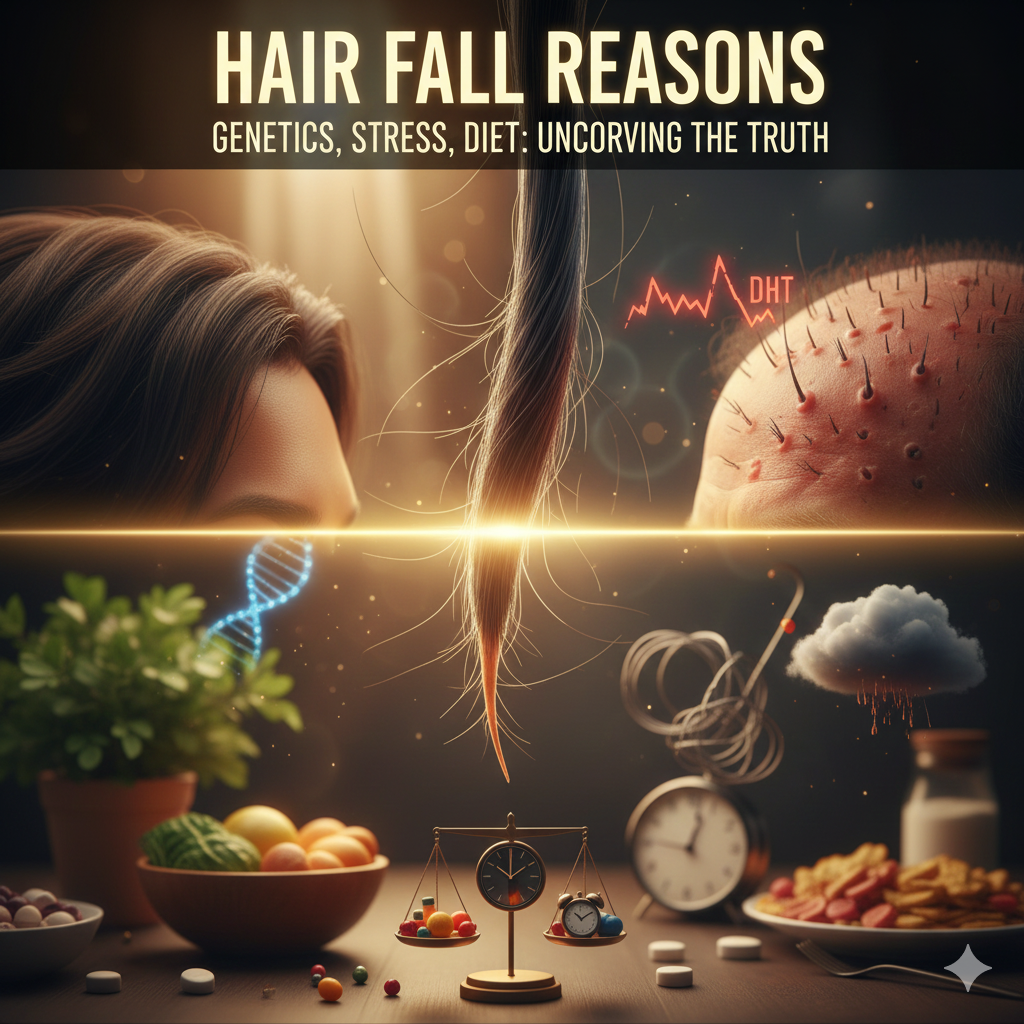
Understanding the specific hair fall reasons is the first step toward effective treatment. Hair loss isn’t just about age; it involves a complex interplay of biology, environment, and lifestyle. In this article, we will explore the 10 most common reasons for hair fall and how to address them.
1. Genetics: The Role of Heredity (Androgenetic Alopecia)
The most common of all hair fall reasons is hereditary. If your parents or grandparents experienced thinning, there is a high chance you will too.
- Male Pattern Baldness: Usually starts with a receding hairline or a bald spot on the crown. It is driven by a sensitivity to DHT (Dihydrotestosterone), a byproduct of testosterone that shrinks hair follicles.
- Female Pattern Thinning: Women rarely go completely bald, but they experience significant thinning along the part line or the top of the head.
2. Hormonal Imbalances-Hair Fall Reasons
Hormones regulate almost every process in our body, including the hair growth cycle. Any shift in these levels can lead to sudden shedding.
- Pregnancy and Childbirth: Many women experience “Telogen Effluvium” after giving birth. This happens because estrogen levels drop suddenly, pushing many hair follicles into the shedding phase at once.
- PCOS (Polycystic Ovary Syndrome): This condition increases androgen levels in women, leading to thinning on the scalp and unwanted hair growth on the face.
- Menopause: A decrease in estrogen and progesterone makes hair grow more slowly and become much thinner.
3. Thyroid Issues-Hair Fall Reasons
Both an overactive thyroid (Hyperthyroidism) and an underactive thyroid (Hypothyroidism) can cause hair loss. The thyroid gland produces hormones essential for the development and maintenance of hair follicles. When these hormones are out of balance, hair becomes brittle and eventually falls out from the root.
4. Nutritional Deficiencies: You Are What You Eat
If your body doesn’t get enough nutrients, it prioritizes vital organs (like your heart and lungs) over your hair. Common deficiencies that serve as major hair fall reasons include:
- Iron Deficiency (Anemia): Iron helps red blood cells carry oxygen to your cells. Without it, hair follicles are starved of oxygen.
- Protein Deficiency: Hair is made of a protein called keratin. A low-protein diet makes hair weak and stagnant.
- Biotin and Zinc: These minerals are crucial for hair tissue growth and repair.
5. Stress: The Silent Hair Killer-Hair Fall Reasons
Stress doesn’t just affect your mind; it physically impacts your scalp. There are three types of hair loss associated with high stress:
- Telogen Effluvium: Severe stress pushes hair follicles into a resting state.
- Trichotillomania: An impulse control disorder where people pull out their own hair as a way to deal with negative emotions.
- Alopecia Areata: Stress can trigger the immune system to attack hair follicles.
6. Improper Hair Care and Styling-Hair Fall Reasons
Sometimes, the way we treat our hair is the primary cause of its downfall.
- Traction Alopecia: This is caused by pulling hair too tight in ponytails, braids, or buns. The constant tension damages the follicle permanently.
- Heat Damage: Excessive use of blow dryers, curling irons, and straighteners breaks the hair shaft.
- Chemical Overload: Frequent bleaching, dyeing, or perming strips the hair of its natural oils and elasticity.
7. Medications and Medical Treatments
Certain drugs have side effects that disrupt the hair growth cycle. These include:
- Chemotherapy: This targets rapidly dividing cells, which unfortunately includes hair follicles.
- Blood Thinners: Anticoagulants are known to cause shedding in some patients.
- Antidepressants and Vitamin A Derivatives: High doses of Vitamin A (often found in acne medications) can lead to hair loss.
8. Scalp Infections and Conditions
An unhealthy scalp environment cannot support healthy hair growth.
- Fungal Infections (Ringworm): This can cause scaly patches and bald spots on the scalp.
- Seborrheic Dermatitis: Severe dandruff can cause inflammation, making you scratch your head and damage the hair roots.
- Psoriasis: When skin cells build up, it can block follicles and lead to temporary thinning.
9. Age and Natural Thinning-Hair Fall Reasons
As we age, the rate of hair growth slows down. Almost everyone experiences some degree of hair loss as they get older. The follicles eventually stop producing hair, and the strands themselves become finer and lighter in color.
10. Environmental Factors (Pollution and Water)
Living in highly polluted cities or using “Hard Water” (water with high mineral content like calcium and magnesium) can lead to buildup on the scalp. This buildup prevents moisture from entering the hair, making it dry, frizzy, and prone to breakage.
How to Stop Hair Fall: Pro Tips-Hair Fall Reasons
Understanding the hair fall reasons is only half the battle. Here is what you can do:
- Dietary Changes: Incorporate spinach, eggs, berries, and nuts into your diet.
- Scalp Massage: Use oils like Rosemary or Coconut oil to stimulate blood circulation.
- Gentle Handling: Use a wide-toothed comb and avoid brushing wet hair.
- Medical Consultation: If hair fall is sudden or patchy, consult a dermatologist to check for underlying conditions like Alopecia or Thyroid issues.
FAQ: Common Questions on Hair Fall
How much hair fall is normal in a day?
Losing 50 to 100 strands per day is normal. If you notice significantly more in your brush or drain, you should look into the causes.
Can hair loss from stress grow back?
Yes. In most cases of Telogen Effluvium (stress-related hair loss), the hair usually grows back once the stressor is removed or managed.
Which vitamin deficiency causes hair fall?
Deficiencies in Iron, Vitamin D, Vitamin B12, and Zinc are the most common nutritional reasons for hair loss.
Does wearing a hat cause hair fall?
No, wearing a hat does not cause hair fall unless the hat is so tight that it creates tension on the hair roots (Traction Alopecia).
Conclusion
Identifying the specific hair fall reasons is a journey of elimination. Whether it is your DNA, your diet, or your stress levels, there is almost always a solution or a way to slow down the process. Start by improving your lifestyle, and don’t hesitate to seek professional help if the shedding becomes excessive.
Know More Details Click Here
Know More Health Tips Click Here
Would you like me to create a “Daily Hair Care Routine” chart? Comment first